Shoulder or crossbody
Use a simple outline and low-profile closure as your reference. Confirm strap drop, adjustability and usable space instead of judging size from a styled photo.
Start with the look you want, then check what the bag is made from and what it costs to reach you. A restrained design does not establish leather quality, and an item price below US$100 does not establish a delivered price below US$100. Keep style, material evidence and budget as three separate checks.
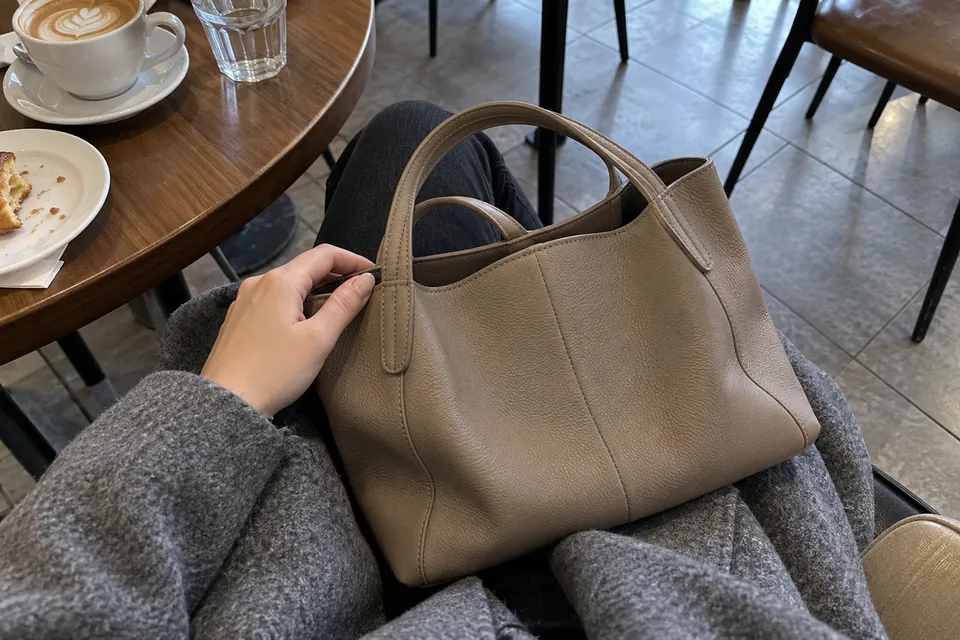
For this guide, quiet luxury means an understated look: simple proportions, restrained hardware and a colour palette that works with your wardrobe. Write down the surface sheen, hardware tone, dimensions and branding preference you want. We use generic style cues to request independent-design options; a style reference is not a promise of designer equivalence.
Use a simple outline and low-profile closure as your reference. Confirm strap drop, adjustability and usable space instead of judging size from a styled photo.
Specify the opening width, laptop or document fit, handle clearance and preferred panel shape. Check the packed size because protective packing can change freight cost.
Choose the amount of slouch or structure you want, then confirm body depth, base support and closure access. A soft or polished appearance does not identify the material.
Keep the visual reference separate from the written material specification and the selected seller’s quote.
If the seller describes leather, ask which body panels, handles and trim the claim covers. Request the hide layer, finish and backing details; a broad label does not specify the whole bag.
Ask whether PU describes a surface finish or a synthetic construction, and what a microfiber label means for the backing. A leather-like texture or a neutral colour does not prove animal-hide content.
Keep seller statements, sample observations, documents and independent tests distinct. Visual QC records agreed visible details; it cannot certify composition from photos alone.
Compare component-level material descriptions and agree measurements, stitching, edges, hardware and packing in the QC scope. Keep missing evidence unverified.
This limits the selected bag’s goods price. Confirm the material, size, colour, quantity tier, MOQ and inclusions. A US$75 item fits this goods-only ceiling, but it can exceed US$100 after other order costs.
The whole order must fit the per-bag limit after allocating China delivery, service fees, QC / packing, international delivery, import charges and payment / exchange fees. Allow headroom for changes instead of spending the whole ceiling on goods.
Delivered cost per bag = (item price × quantity + other whole-order costs) ÷ quantity. Item-price ceiling = US$100 − other costs per bag. A result at exactly US$100 leaves no headroom.
USD planning worksheet
The budget starts at US$100 and can be edited. All cost fields start unknown. Try the US$97 arithmetic example, then replace it with the quote for your exact variant, material, quantity and destination. The demo is not a product offer or a material claim.
Use one currency throughout. All extra charges are totals for the whole order; the calculator divides them across your bags. Leave unquoted costs blank. Enter 0 only for a confirmed included or zero charge, and count each fee once.
Estimate incomplete — confirm all costs before judging the delivered budget.
Blank charges are unknown, not free.
Planning only, based on your entries. Recheck the freight and fee totals whenever quantity, destination or packing changes. Allow extra headroom for quote changes; no contingency is added automatically. A final delivered quote still needs seller, packing and route confirmation.
Hypothetical USD amounts only. No material type is assigned to these examples; they are not live listings, our fee schedule or carrier quotes. Each case assumes one bag and the same US$42 in additional costs:
US$55 goods + US$42 other costs = US$97 for one delivered bag.
US$3 below the US$100 target
US$75 goods + US$42 other costs = US$117 for one delivered bag.
US$17 above the US$100 target
With US$42 of other costs per bag, the goods ceiling is US$58. The US$97 example leaves only US$3 of headroom. Changing quantity does not automatically preserve the same freight or fees: confirm all order totals again. Use the full worksheet for a larger test order and planning buffer, or the US$50 guide for a lower limit.
Include the selected listing or independent-design reference, dimensions, colour, surface finish, hardware tone and component material requirements. Add quantity, destination country / postal code, QC and packing needs, and whether US$100 means goods only or delivered per bag. List any missing evidence or unquoted charges.
Request style and delivered-cost reviewWe use it as a style brief: understated shapes, restrained hardware, a considered colour palette and details that suit your everyday use. It is not a material grade, quality certificate or promise of designer equivalence. Agree the look with references and measurements, then check material and cost separately.
Our style brief does not require one material. A leather or synthetic bag can have an understated shape, but the appearance does not establish its composition. Ask for the body, surface, backing, handles, trim and lining separately, and keep unsupported seller claims unverified.
Those are different budgets. A seller’s item price covers only what the selected variant quote explicitly includes. A US$100 delivered ceiling must also cover allocated China delivery, service fees, QC and packing, international delivery, import charges and payment or exchange fees.
Yes. In our hypothetical one-bag example, US$75 goods plus US$42 in other costs totals US$117 delivered. The US$55 goods example totals US$97 using the same additional-cost assumption. These are arithmetic examples, not live offers, fee schedules or carrier quotes, and no material is assigned to the amounts.
Leave them blank in the calculator so the estimate stays incomplete. Enter zero only for a confirmed included or zero charge, and count each cost once. If a DDP route includes import charges, confirm its destination coverage and exclusions before entering zero separately. Recheck all order totals when quantity or packing changes.
Send the listing or independent-design reference, selected variant, dimensions, preferred hardware and surface finish, component material requirements, quantity, destination and delivered budget. Include available material evidence, QC and packing needs, and all costs that are still unknown.
Use the material, inspection, fee and delivery guides to prepare the same specification for each seller quote. English-only guides are labelled.
Describe the silhouette and everyday use requirements.
Separate component claims from evidence.
Compare the goods price with other order charges.
Plan a larger order with a buffer.
Agree visible checks and packing needs.
Confirm destination coverage and exclusions.
Last updated