Full-grain leather
Animal-hide leather that retains its original grain surface without corrective removal.
What to confirm: Ask which bag panels use it, the animal type and finish, and whether the selected sample matches the written specification.
A low price and the word “leather” do not prove what a handbag is made from or what it will cost to reach you. First confirm the exact material and variant. Then compare the item price with the delivered cost per bag, including handling, QC, packing and delivery.
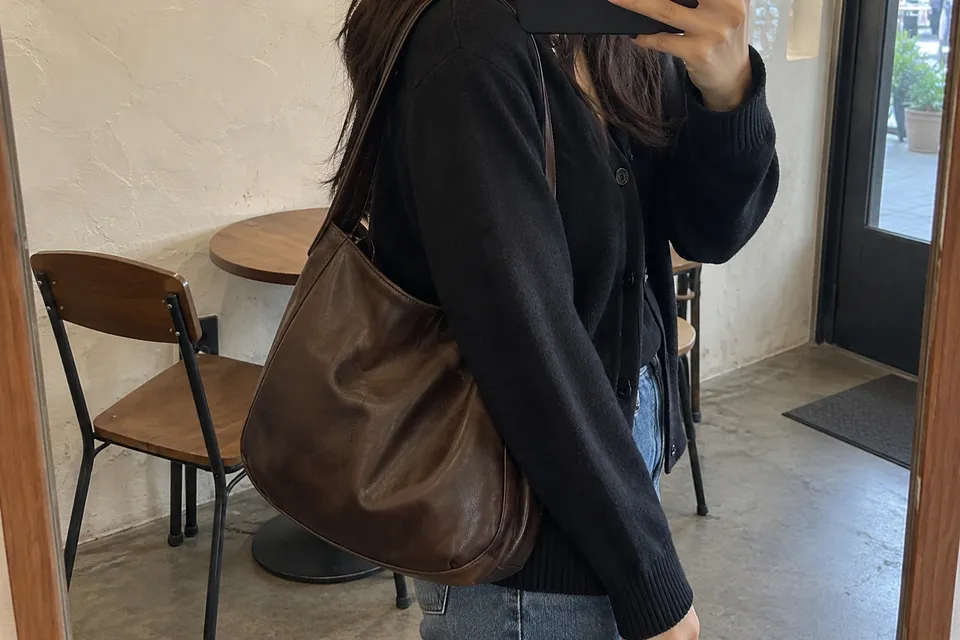
Ask about the body, surface finish, backing, handles, trim and lining. A leather handle does not establish a leather body; a leather body does not establish a leather lining. These construction terms help frame the question, but they do not verify any individual listing.
Animal-hide leather that retains its original grain surface without corrective removal.
What to confirm: Ask which bag panels use it, the animal type and finish, and whether the selected sample matches the written specification.
Split leather comes from a middle or lower hide layer. A surface coating is a separate part of its construction.
What to confirm: Ask whether the backing is split hide, what coating is applied, and whether the body, handles and trim use the same construction.
These synthetic constructions are alternatives to animal-hide leather. A PU finish can also be applied to leather, so “PU” alone does not identify the backing.
What to confirm: Request the surface, backing and fibre composition. Do not turn a synthetic-material description into a natural-leather claim.
Reformed leather fibres or particles, with or without a binder, differ from an intact hide panel.
What to confirm: Request the composition and the exact component it covers. Do not describe a reformed-fibre sheet as full-grain leather.
Construction references: Leather Working Group definitions distinguish leather, split leather, coatings and reformed leather fibre. Leather Naturally’s material FAQs describe synthetic coated fabrics. These references explain terminology; they are not evidence that a seller’s bag meets a description.
Seller stated, sample observed, document received or independently tested
Record which state applies to each claim, with the selected SKU and component. A document for another model or material does not establish the composition of this bag. Keep missing or conflicting details unverified.
Visual QC is not a material certificate. It can document stitching, edge finish, hardware, lining, dimensions and visible mismatch. Photos, smell, texture and price alone are not proof of composition. Use the component-level evidence guide and agree the inspection scope before deciding whether specialist evidence is needed.
Confirm the material construction, dimensions, colour, quantity tier and minimum order quantity. A listing’s starting price may cover another variant. A quote for a synthetic body and a quote for a hide-based body are different specifications, even if the photos look similar.
Add the item subtotal, China delivery, service fee, QC / packing, international delivery, import charges and payment / exchange fees. Divide by the number of bags. Confirm destination and packed weight or volume rather than assuming that every style has the same freight cost. Enter a separate import charge as 0 only if it is confirmed included or not payable, so it is counted once.
Delivered cost per bag = (item price × quantity + other whole-order costs) ÷ quantity. The result applies to the material and variant you entered; it does not establish their composition.
Want understated styling with a US$100 limit? The quiet luxury material and US$100 budget guide keeps the look separate from composition claims and includes a delivered-cost calculation.
USD planning worksheet
Replace the demo inputs with the quote for your exact material, variant, quantity and destination. Change the editable US$50 target to your own budget. The US$49 demo is arithmetic only and does not represent a leather bag offer.
Use one currency throughout. All extra charges are totals for the whole order; the calculator divides them across your bags. Leave unquoted costs blank. Enter 0 only for a confirmed included or zero charge, and count each fee once.
Estimate incomplete — confirm all costs before judging the delivered budget.
Blank charges are unknown, not free.
Planning only, based on your entries. Recheck the freight and fee totals whenever quantity, destination or packing changes. Allow extra headroom for quote changes; no contingency is added automatically. A final delivered quote still needs seller, packing and route confirmation.
Hypothetical USD amounts only. This illustration assigns no material type to the bag and is not a current product price, our fee schedule or a carrier quote. It assumes one bag and itemizes every additional cost.
The extra costs total US$22. This example exceeds a US$50 delivered target by US$7, even though the item price is below US$50. With the same additional costs, the item-price ceiling would be US$28, leaving no headroom. A changed quote can change that ceiling. For a larger order and a planning buffer, use the full landed-cost worksheet. Reconfirm all order totals when you change quantity.
Send the listing link, exact variant, component requirements, quantity, destination country / postal code and delivered budget per bag. Include the seller’s material wording, available evidence, the QC checks you want and any unquoted charges. Request a sample review if the construction or finish is still unresolved.
A category label is not independent material verification. Seller, variant, packing and route details still need confirmation before invoice approval.
No. Price and a listing title do not establish composition. Ask for the selected variant’s body, surface, backing, handles, trim and lining separately. Keep an unsupported leather claim unverified instead of assuming that the whole bag is animal-hide leather.
The words alone do not specify the hide layer, surface finish or which components the seller means. Ask for a component-level specification and supporting evidence for the exact bag. Do not treat a broad label as a complete quality specification.
PU-coated fabric and synthetic microfiber are not animal-hide leather. However, PU may also describe a surface finish on a hide-based material. Ask what is underneath the surface and record the seller’s exact construction description rather than judging by the term alone.
No. Visual QC can record visible condition, measurements and whether the received item matches agreed details. Photos alone cannot certify material composition. If composition is essential, agree the required supporting documents or appropriate specialist testing separately.
Only include a charge in the item price if the seller or route quote explicitly confirms it. Otherwise add China delivery, service fees, QC and packing, international delivery, import charges and payment or exchange fees. Leave unknown charges blank in the calculator, and do not count a charge twice when it is confirmed included.
No. It is a hypothetical one-bag calculation using an item price of US$35 and US$22 in other costs. No material type is assigned to those amounts, and they are not a live listing, service-fee schedule or carrier quote. Use your selected variant and confirmed costs instead.
Connect material confirmation with seller review, inspection scope, order fees and the destination route. English-only resources are labelled.
Separate goods from whole-order fees.
Plan larger orders and a budget buffer.
Plan a strict delivered-cost limit.
Agree visible checks and packing requirements.
Confirm destinations, inclusions and exclusions.
Confirm the seller, variant and minimum order.
Last updated