Style & Occasion
Designer Bag Occasion and Carry Guide
Choose an occasion bag by the job it needs to do. Work may require documents or devices, weekends may favour hands-free access, and an evening event may call for a compact load that works with your outfit. Those are starting questions, not fixed rules about which brands belong in each setting.
Draft editorial check:
On this page
- Choose by the day’s non-negotiable task
- Begin with the day rather than the label
- A practical occasion comparison
- For work, check the equipment first
- For weekends, prioritize the way you move
- For evening plans, test the whole outfit
- Use brand examples as specific references
- Decide what you are willing to compromise
- Continue your research
- Choose by the day’s non-negotiable task
- Sources and calculation method
- Questions before purchase
Choose by the day’s non-negotiable task
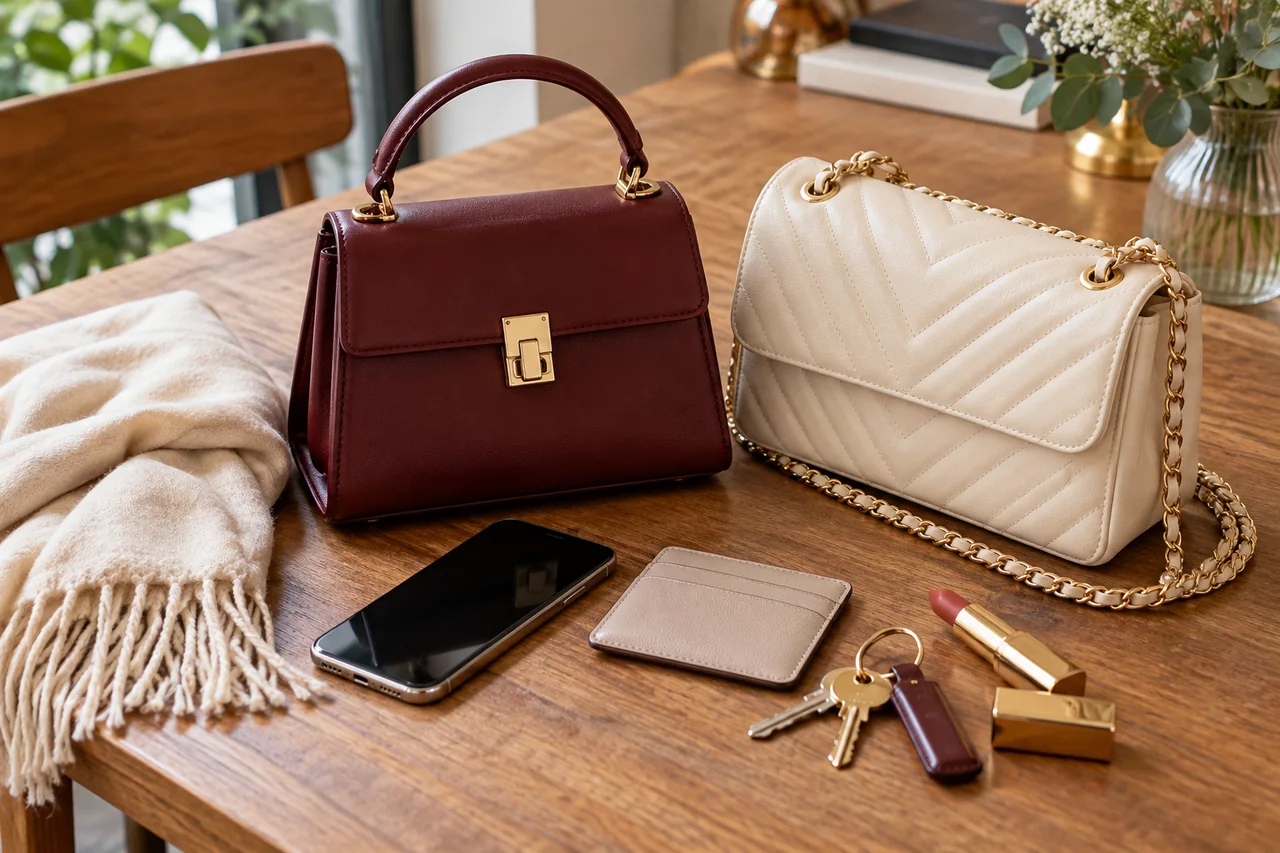
For a commute, a required device+case and a closed top can eliminate a shortlist before style matters. For a standing event, hands-free carry may be essential; for a seated dinner, a compact hand-carried format may be acceptable. Write one must-have and one tolerated compromise for each occasion. Keep measured fit, comfort observed by you and unverified assumptions in separate columns; do not turn these examples into universal style rules.
Begin with the day rather than the label
“Everyday,” “work” and “evening” can mean very different things to different people. A workday might involve a laptop commute or only a phone and cardholder. A weekend could mean a short café visit or a full day away from home. Before comparing bags, describe the actual schedule.
Write down where you are going, how you will travel, which items must come with you and how often you need to reach them. Add any dress requirement from the venue or invitation. Then consider whether you want a single bag for the entire day or are happy to change before an evening plan.
A practical occasion comparison
Swipe the table horizontally to see all columns.
| Situation | First requirement to establish | Useful carry question |
|---|---|---|
| Workday | Required equipment and personal essentials | Will carrying everything leave your hands available? |
| Weekend errands | Frequent access and realistic walking time | Can you retrieve essentials without stopping to repack? |
| Lunch or casual dinner | Compact load and outfit proportions | Does the bag remain convenient while seated? |
| Formal evening | Venue guidance and essential items | Can you manage the bag alongside a coat or drink? |
No row automatically requires a particular brand or silhouette. The purpose is to identify the trade-offs before choosing by appearance.
For work, check the equipment first
If your job requires a laptop, documents, charger or other equipment, make those items the first test. Measure them in their usual protective cases and establish whether they must travel in the same bag. Do not assume that a medium product name means office equipment will fit.
A separate work carrier can be a reasonable choice if you prefer a smaller personal bag, but consider the combined load and how you move between locations. Repeatedly handling several bags may be inconvenient on crowded transport or during a walking commute.
Also think about retrieval. Keep the objects you need at entrances or payment points accessible without exposing or unpacking work materials. A visually pleasing arrangement is less useful if it repeatedly interrupts your routine.
For weekends, prioritize the way you move
Consider the amount of walking, whether you will shop, and how often you use your phone. Hands-free carry may be useful, but comfort still depends on the actual bag position, strap fit, clothing and load. Try the combination rather than assuming that a particular carry label guarantees comfort.
Reduce optional items only if that change is realistic. If you always need glasses or personal essentials, include them from the start. A weekend checklist should reflect the outing you are planning rather than an unusually minimal packing demonstration.
Check access while standing. A bag that is easy to organize on a table can be harder to use when you are holding another object or wearing outerwear.
For evening plans, test the whole outfit
An evening bag should accommodate what you need to get home as well as what you want during the event. Include your phone, payment essentials, keys and any personal necessities. Keep their usual cases where required.
Try the bag with the clothing and coat you plan to wear. Look at proportions in a mirror, then sit down and practice carrying it with your outerwear. Think about where it can rest safely at the venue. If the invitation specifies a dress code, follow that guidance instead of assuming that a brand name settles suitability.
A restrained bag can suit a detailed outfit, while a more visually prominent bag can become the focal point. These are styling possibilities rather than rules, and personal preference matters.
Use brand examples as specific references
For a concrete example of carry options, Fendi's selected Baguette Soft Medium reference lists detachable handle and shoulder-strap components. Balenciaga's selected Le City Small reference lists a removable adjustable shoulder strap. Those are official features; whether either arrangement suits your workday or evening requires a personal check. Fendi reference and Balenciaga reference, both checked 16 October 2026.
This is an independent editorial introduction to how specific designs can enter an occasion comparison. It does not assign an entire brand to a lifestyle, claim one is more prestigious, or infer that another seller has an authorized relationship with either house.
Decide what you are willing to compromise
Separate requirements from preferences. Safe storage for essential items may be a requirement; matching hardware to jewellery may be a preference. If a candidate fails a requirement, a strong visual preference does not resolve that problem.
For a bag intended to cover several occasions, compare your most demanding regular day first. Then consider whether its size and appearance still suit the lighter occasions. You may find that one design works well across your routine, or that changing bags is simpler than forcing every outing into the same packing arrangement.
Continue your research
Explore the 1688bags editorial guides to build your shortlist and clarify unanswered fit questions. Check individual listings independently; editorial coverage does not certify merchandise, current stock or seller authorization.
Choose by the day’s non-negotiable task
Edit this local table, then copy it into your sourcing request. Entries are not saved or sent automatically.
Example / reference — edit the fields below
Complete with your own requirements; unknowns stay pending.
Related reading
Sources and calculation method
Research reference date: . This is a source-reference date, not a publication date or a hands-on test.
Method: the editorial comparisons use the cited specifications; worked calculations state their assumed inputs. Product-page descriptions do not establish physical fit, material performance or stock.
Questions before purchase
Can a small designer bag work for the office?
Yes, if it accommodates your actual needs or complements a separate equipment carrier. Verify the load rather than relying on the size name.
Must an evening bag be carried by hand?
No. Choose a carry method compatible with your outfit, venue and comfort. Follow any stated event requirements.
Is one designer bag suitable for every occasion?
That depends on your routine. Compare required contents, access and carry needs across your real activities before deciding.