Materials & Craft
Luxury Bag Materials and Craftsmanship: Read the Construction
Read a bag as an assembly: body, trim, lining, surface finish and connections. Luxury-brand product descriptions show why a single material label can be incomplete. Use that vocabulary to describe your own requirements, then assess the selected product separately. A similar texture or silhouette does not establish equivalent materials, workmanship, authenticity or brand affiliation.
Draft editorial check:
On this page
- Compare two products with a component matrix
- Short answer
- Start with the four material zones
- Official examples: precise descriptions matter
- Look at connections, not only surface texture
- Translate inspiration into a neutral design brief
- Next step and sources
- Compare two products with a component matrix
- Sources and calculation method
- Questions before purchase
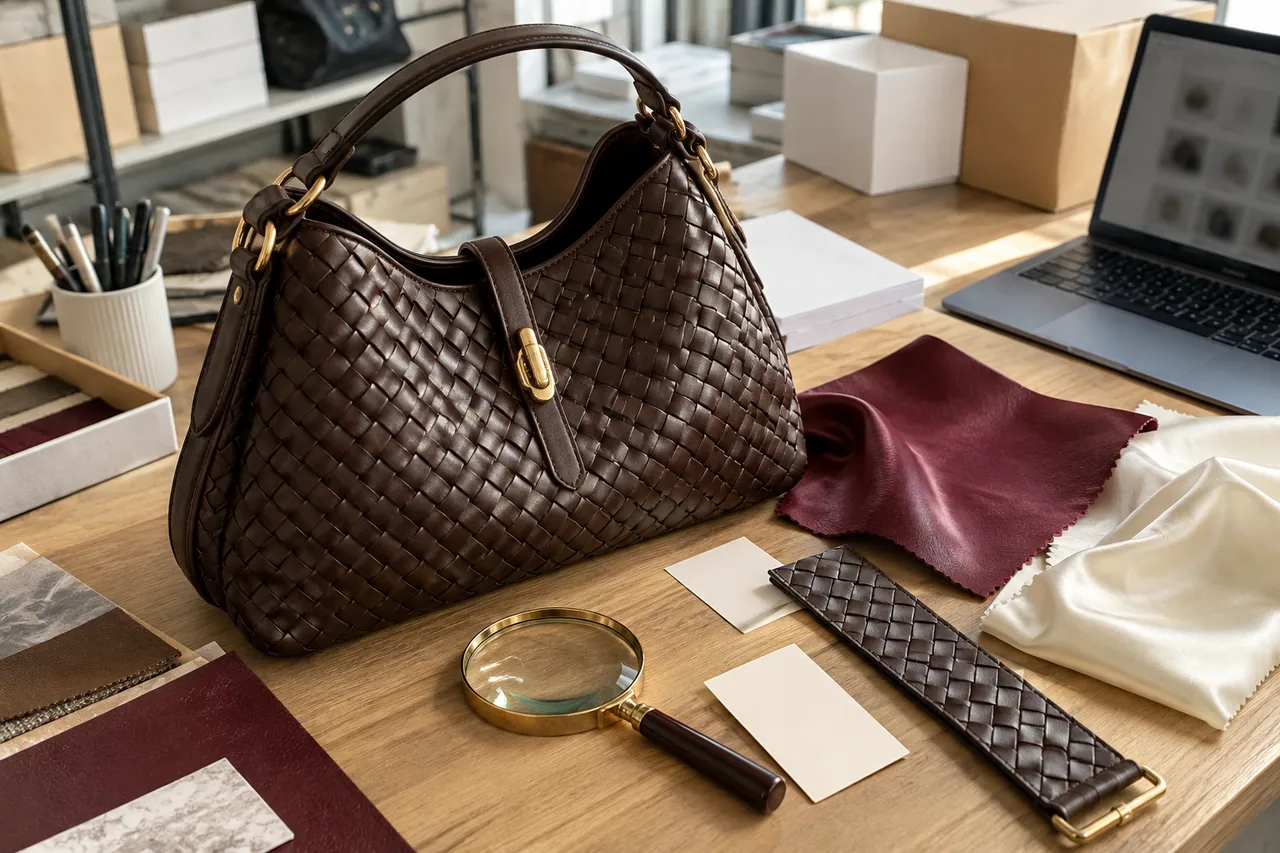
Compare two products with a component matrix
If listing A says “leather” and listing B specifies a PU body, woven lining and metal zipper, B currently has a more complete description, not necessarily better quality. Mark A’s body composition, coating, lining and edge construction as unknown until clarified. Select only after the required component and connection details are evidenced. A leather label cannot compensate for an unverified handle attachment.
Short answer
1688 Bags is an independent small-batch 1688/Taobao buying-agent desk, not an authorized representative of the brands discussed here. These examples are educational references, not branded sourcing offers.
Start with the four material zones
The body is the main enclosure. Trim includes handles, tabs, piping and other smaller parts, depending on the design. The lining forms the interior surface or internal compartment structure. A surface finish changes what you see and touch, but its appearance alone does not identify the underlying material.
Swipe the table horizontally to see all columns.
| Zone | What to describe | Practical implication |
|---|---|---|
| Body | Material construction, stiffness and panel arrangement | Shape, folding and packing needs |
| Trim | Handle, strap, piping and tab materials separately | Touch points and attachment details |
| Lining | Interior material, pockets and whether it is attached | Access, snag points and cleaning considerations |
| Surface | Coating, texture, embossing or other stated finish | Appearance and care requirements |
This map is useful when comparing two designs that look similar in listing photographs. One may have a soft textile body with structured trim; another may achieve its outline through stiff panels. Neither construction should automatically be described as better. The useful question is which one suits the intended use and packing method.
Official examples: precise descriptions matter
Louis Vuitton’s official Monogram Speedy Bandoulière 25 page, reference M46977, identifies a coated-canvas exterior, cowhide trim and textile interior lining. The lesson is component scope: leather trim does not make the whole bag a leather-body design. The page also presents other material variants, so the family name alone cannot identify a particular construction. Louis Vuitton, M46977
Prada’s Re-Nylon and Saffiano leather shoulder bag, reference 2VH113_2DMH_F0002_V_XOP, combines a Re-Nylon body with Saffiano leather trim and a Re-Nylon lining. Its official description specifies recycled polyamide as the main material. That statement belongs to this identified product; it does not validate a generic supplier’s recycled-content claim. Prada product details
These examples teach a reading method rather than a ranking of brands. Keep the reference code beside your notes, because names, sizes, seasons and regional product pages can differ. Avoid borrowing branded material names for unrelated products when those terms imply a specific source or proprietary construction.
Look at connections, not only surface texture
Craftsmanship becomes easier to discuss when you identify a connection and its purpose. Follow a handle from the grip to its attachment. Look at how the tab sits against the body, whether the seam is visibly aligned and whether hardware touches an area likely to mark during packing. These observations describe what is visible; they are not a load rating.
At the opening, check how the zipper ends meet the surrounding panels and whether the lining obstructs movement. Around a flap or base, compare edge finishing and corner alignment. On a structured bag, inspect whether both sides sit evenly in the same supported position. On a soft bag, avoid treating natural collapse as a manufacturing defect unless the agreed specification requires a fixed shape.
A clean photograph cannot establish stitch strength, coating adhesion, abrasion resistance or long-term wear. If those properties determine whether a product is suitable, define a separate testing requirement and obtain an appropriately scoped result before making performance claims.
Translate inspiration into a neutral design brief
Use functional language that a seller can answer without copying a protected identity. Describe a compact shoulder bag, an organized interior or a softly structured opening. Specify your own dimensions and permitted decoration. Do not request another brand’s logos, labels, packaging or confusingly similar presentation.
A practical construction brief can read:
- Intended use: everyday small-item carry; essential contents listed separately
- Body: desired flexibility and whether folding is permitted
- Trim: handle and strap appearance, attachment photographs required
- Interior: pocket count, opening access and lining color
- Finish: acceptable visible variation, with an agreed physical reference where needed
- Connections: closure movement and attachment details to review
- Packing: shape support and protection for exposed hardware
This article explains construction vocabulary. For the separate process of evaluating seller material statements, use the material-evidence guide; for current inspection services, review the bag QC scope.
Next step and sources
Send an original or unbranded bag brief with the four material zones and intended use. For custom development, use the route on the contact page.
Sources checked on 2026-10-16: the linked official Louis Vuitton and Prada product pages, plus the linked 1688 Bags service pages. Brand examples are product-specific; the neutral inspection and briefing suggestions are editorial guidance.
Compare two products with a component matrix
Edit this local table, then copy it into your sourcing request. Entries are not saved or sent automatically.
Example / reference — edit the fields below
Complete with your own requirements; unknowns stay pending.
Sources and calculation method
Research reference date: . This is a source-reference date, not a publication date or a hands-on test.
Method: the editorial comparisons use the cited specifications; worked calculations state their assumed inputs. Product-page descriptions do not establish physical fit, material performance or stock.
Questions before purchase
Does an expensive bag always have a leather body?
No. The official examples above include coated canvas and nylon-based bodies. Read the exact variant’s component description rather than assuming from price or branding.
Can a textured surface tell me what a bag is made from?
No. Similar-looking finishes can appear on different constructions. Treat texture as an observation and verify the material claim separately.
Can 1688 Bags authenticate luxury bags from photos?
This guide does not offer an authentication service. Photo-based sourcing checks document visible features and agreed specifications; they do not establish luxury-brand authenticity or long-term durability.