Comparison & Selection
Logo-Free Alternatives to Louis Vuitton and Gucci Bags: A Practical Buyer’s Checklist
Turn designer-bag inspiration into an independent, logo-free sourcing brief based on function, material, fit and a realistic landed budget.
Draft editorial check:
On this page
- Turn one reference into three neutral requirements
- Scope and independence
- 1. Translate the reference into a function
- 2. Specify each material component
- 3. Measure the things you need to carry
- 4. Make the closure a deliberate choice
- 5. Set a landed budget instead of chasing a low listing price
- 6. Define acceptance before approving the order
- Turn one reference into three neutral requirements
- Sources and calculation method
- Questions before purchase
Turn one reference into three neutral requirements
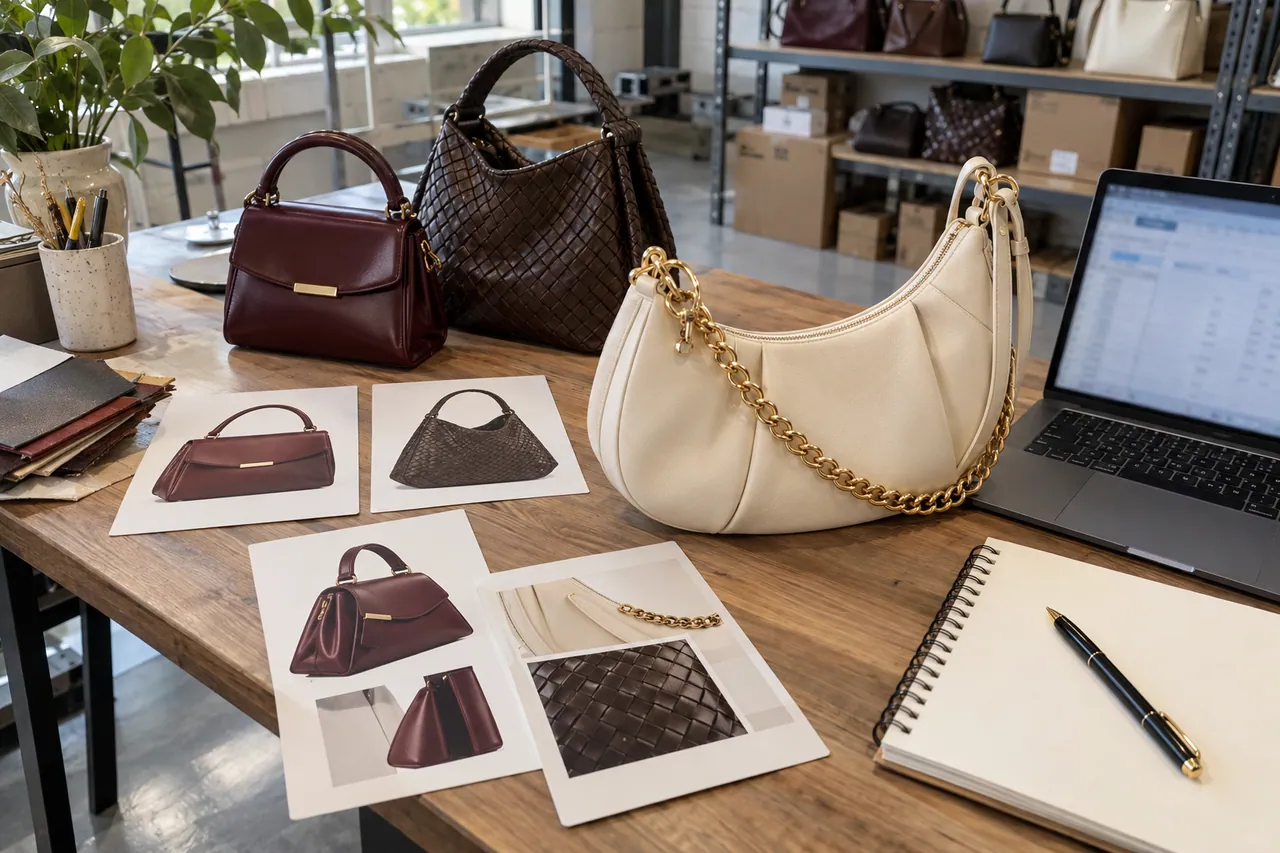
For a work-tote brief, replace a brand name with three independently checkable requirements: your actual laptop+case must enter the opening; the loaded bag must close in the chosen way; the handle must clear your coat. Set the target measurements from those objects, not a copied branded silhouette. Send two independent logo-free listings and ask which fails a must-have before comparing price.
Scope and independence
If you are searching for alternatives to Louis Vuitton or Gucci bags, first decide what you want to preserve: everyday capacity, a comfortable shoulder carry, a compact zip-top format or a particular color palette. Those needs can guide a useful search without asking a seller to copy a branded product.
Here, “alternative” means a separately designed bag that meets similar practical needs. It does not mean a counterfeit, a logo removed from a replica or a promise of designer-level materials and workmanship. A less expensive bag should be assessed on its own evidence.
1688 Bags is an independent small-batch bag sourcing service, not a Louis Vuitton or Gucci affiliate or authorized seller. The brand references below are editorial examples. This checklist is based on product specifications and procurement questions, not personal wear testing.
1. Translate the reference into a function
A brand name is a poor purchasing specification. “I want a bag like this” leaves a supplier guessing about the feature you actually value. Start with a sentence that describes your routine: “I need a plain tote for a laptop and notebook, with handles that fit over a winter coat.”
The Louis Vuitton Neverfull MM is a useful reference for a tote discussion, while the Speedy Bandoulière 25 introduces a compact zip-top option. Gucci's Ophidia medium tote provides another named tote example. Their official listings are linked for identification, not as evidence that an unbranded product shares their construction. Neverfull MM · Speedy Bandoulière 25 · Ophidia medium tote.
Use broad descriptions such as “plain rectangular work tote” or “compact everyday zip-top bag.” Request an independent design. Do not turn the luxury brand name into the supplier's proposed product name, packaging or authenticity claim.
2. Specify each material component
Ask separately about the outer body, trim, lining, straps and base reinforcement. “Leather bag” is too broad if only the handles are leather. Likewise, a photograph cannot confirm the substrate beneath a coated surface.
For a shortlisted product, request the seller's written material description and the exact variant to which it applies. If the description says polyurethane, coated textile or synthetic leather, preserve that wording in your comparison. Do not silently upgrade it to leather in a customer-facing description.
For a first order, a sample can help you assess feel, finish and construction. It does not independently prove a chemical composition claim or predict years of use. Where a material requirement is commercially important, decide what additional documentation or independent testing you need before ordering.
3. Measure the things you need to carry
Write down your largest must-fit item, including its case or sleeve. Then ask for opening width, internal usable dimensions, base dimensions and handle or strap drop. Clarify whether a seller's advertised width was measured at the top or bottom.
A tote that looks roomy in a styled photograph may have a narrow opening or lose useful space to lining and pockets. Ask for a measurement photograph of the actual sample with the tape visible. For a laptop bag, request a fit demonstration using an object with your device's dimensions rather than relying on a generic laptop claim.
Record your preferred empty weight too. Agree how it will be measured, including whether removable straps or pouches are attached.
4. Make the closure a deliberate choice
Choose your required opening before choosing decorative hardware. A top zipper, a magnetic fastening and an open top feel different in daily use. Consider whether you need quick one-handed access, containment when the bag tips over or a separate pocket for small valuables.
For a sample, request a short opening-and-closing video and close-up photographs of zipper ends, strap attachments, seams and lining. These checks can reveal visible issues; they do not establish theft resistance, load capacity or long-term reliability.
Avoid specifying copied branded clasps, monograms, badges or packaging. A plain exterior alone does not establish that every design element is suitable for commercial sale. Review the actual product and its presentation before committing to a batch.
5. Set a landed budget instead of chasing a low listing price
A supplier's item price is only one part of a small-order decision. Ask for an itemized estimate covering quantity, color variants, sample costs, buying-service fees, inspection scope, packing and shipping. Confirm how duties and taxes are treated for your destination.
Separate a provisional estimate from a final approved quotation. Ask what can change if the packed dimensions, shipping route or order quantity changes. An attractive unit price may become less useful when the minimum order forces you to buy colors you do not need.
For a boutique test order, a narrower range of well-specified variants may be easier to evaluate than a larger mixed batch. That is a planning suggestion, not a sales or margin guarantee.
6. Define acceptance before approving the order
Use a short written checklist: correct variant, agreed measurements, material description, functional fastenings, acceptable stitching and edge finish, and the agreed packaging. Specify any extra photographs you need before shipment.
Ask what happens if the sample or warehouse inspection fails your requirements. Establish who approves a replacement, whether a seller return is possible and which costs remain payable. Do not assume a cross-border purchase has the same return process as shopping from a domestic retailer.
Keep the accepted sample details and supplier reference together. A later restock should be checked against the agreed specification rather than approved solely because its listing photograph looks familiar.
Turn one reference into three neutral requirements
Edit this local table, then copy it into your sourcing request. Entries are not saved or sent automatically.
Example / reference — edit the fields below
Complete with your own requirements; unknowns stay pending.
Sources and calculation method
Research reference date: . This is a source-reference date, not a publication date or a hands-on test.
Method: the editorial comparisons use the cited specifications; worked calculations state their assumed inputs. Product-page descriptions do not establish physical fit, material performance or stock.
Questions before purchase
Does a logo-free bag offer the same quality as Louis Vuitton or Gucci?
There is no basis for that blanket claim. Assess each product's materials, construction, testing and seller support independently. Appearance and price do not prove equivalence.
What should I search for instead of “LV replica” or “Gucci replica”?
Use functional searches such as “unbranded work tote with zipper,” “plain coated-fabric everyday bag” or “adjustable-strap leather shoulder bag.” Then verify the materials and actual design of each result.
What should I send to a sourcing agent?
Submit your sourcing brief to 1688 Bags with a logo-free product link or functional description, quantity, color, dimensions, material requirements, destination and target landed budget. Ask for seller, variant, QC and cost review before purchase approval. The brief should request independent products, not branded replicas or implied designer authorization.